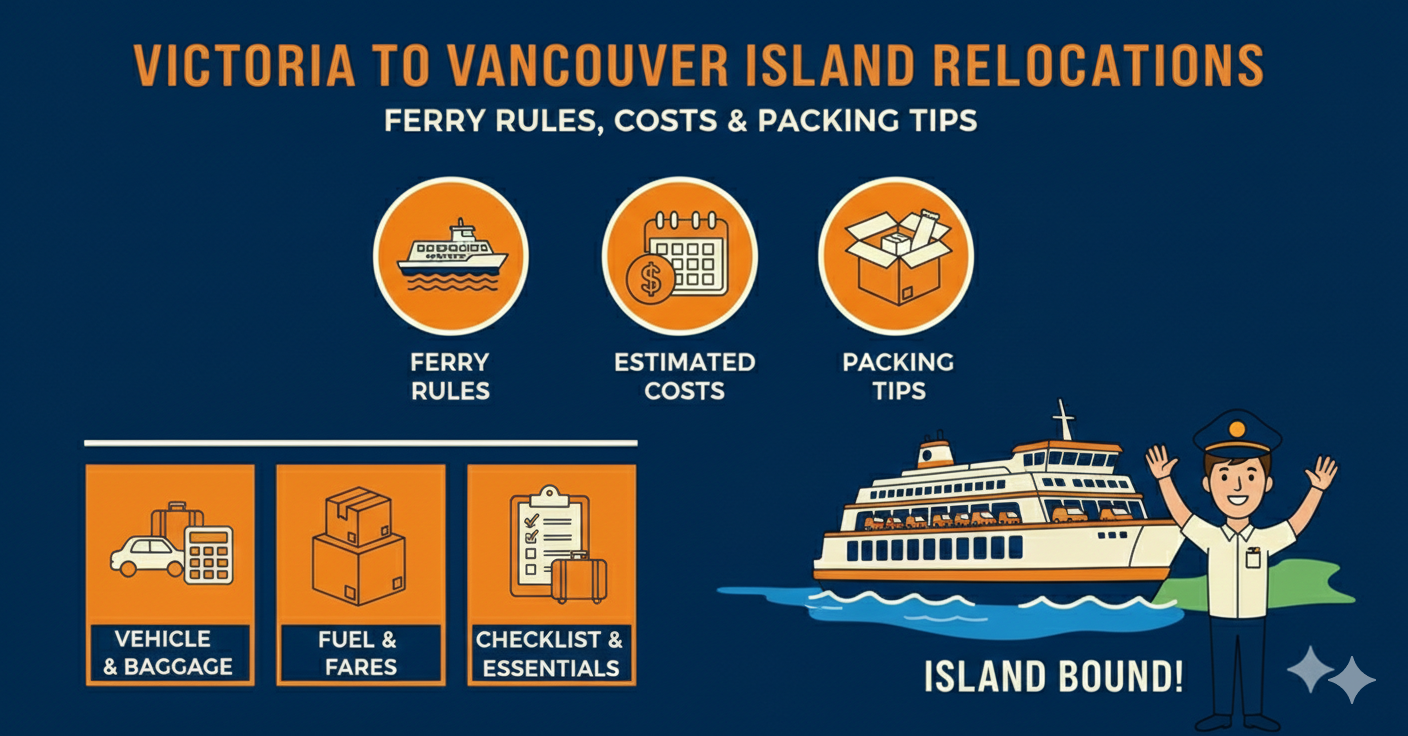
Relocating from Victoria to Vancouver Island—or between Island communities—looks simple on a map. In practice, it’s a logistics-heavy move defined by ferry schedules, vehicle rules, weight limits, weather windows, and tight timelines. This guide delivers a clear, operational playbook for planning a smooth Victoria–Vancouver Island relocation, covering ferry regulations, real-world costs, packing strategies, and professional moving considerations that keep your move on schedule and on budget.
Why Victoria–Vancouver Island Moves Are Unique
Island Geography Changes Everything
Vancouver Island relocations depend on marine transport. Unlike mainland moves, timing revolves around ferry sailings, terminal cut-offs, loading procedures, and seasonal demand. A missed sailing can push a move by hours—or days—during peak periods.
Limited Access Windows
Terminals operate with strict check-in times for oversized vehicles. Moving trucks often require earlier arrival, additional documentation, and height/length clearance. These variables must be planned in advance to avoid costly delays.
Understanding Ferry Routes for Moving Trucks
Primary Ferry Routes Used for Relocations
Most Victoria-area relocations rely on one of the following routes:
- Swartz Bay ↔ Tsawwassen (the busiest corridor)
- Departure Bay (Nanaimo) ↔ Horseshoe Bay
- Duke Point (Nanaimo) ↔ Tsawwassen (preferred for commercial vehicles)
Each route has different commercial-vehicle rules, loading priorities, and sailing frequencies. Duke Point is often favored for moving trucks due to easier access and fewer passenger bottlenecks.
Commercial Vehicle Classification
Moving trucks are typically classified as commercial vehicles. This affects:
- Booking requirements
- Arrival cut-off times
- Fare calculations
- Lane assignments during loading
For official ferry policies, schedules, and vehicle requirements, consult BC Ferries directly.
Ferry Rules That Affect Your Move
Height, Length & Weight Restrictions
Moving trucks exceeding standard vehicle dimensions must declare:
- Total length (truck + trailer if applicable)
- Overall height
- Gross vehicle weight
Failure to declare accurately can result in denied boarding.
Dangerous Goods Prohibitions
Certain household items cannot travel by ferry, including:
- Propane tanks
- Gasoline cans
- Paint thinners and solvents
- Some lithium batteries
Transport rules are regulated federally. Refer to Transport Canada for dangerous goods guidelines that apply to household relocations.
Sailing Reservations
Commercial vehicles often require advance reservations, especially during:
- Summer peak season
- Long weekends
- End-of-month move dates
Same-day bookings are risky for moving trucks.
Cost Breakdown: What a Victoria–Vancouver Island Move Really Costs
Ferry Fees
Ferry pricing is based on:
- Vehicle length (per foot)
- Driver and passenger fees
- Route selection
- Time of sailing
Larger trucks can incur several hundred dollars per crossing.
Moving Service Costs
Professional relocation pricing depends on:
- Distance between pickup and delivery
- Total shipment weight
- Packing services required
- Ferry wait times
- Crew size
For a transparent overview of moving rates and what affects them, review Prestige Moving pricing.
Hidden Cost Triggers to Avoid
- Missed sailings causing crew overtime
- Incomplete inventories leading to re-handling
- Poor packing resulting in damage claims
- Inaccurate access details at origin or destination
Packing for a Ferry-Based Move
Why Ferry Moves Demand Better Packing
Marine transport introduces vibration, humidity, and longer handling cycles. Items experience:
- Lateral movement during loading
- Temperature shifts
- Additional lift points
Professional Packing Advantages
Using professional-grade packing reduces risk for:
- Electronics
- Artwork
- Antiques
- Fragile furniture
A detailed breakdown of best practices is outlined in this expert packing guide, which addresses long-distance and specialty-item protection.
What Should Never Go on the Truck
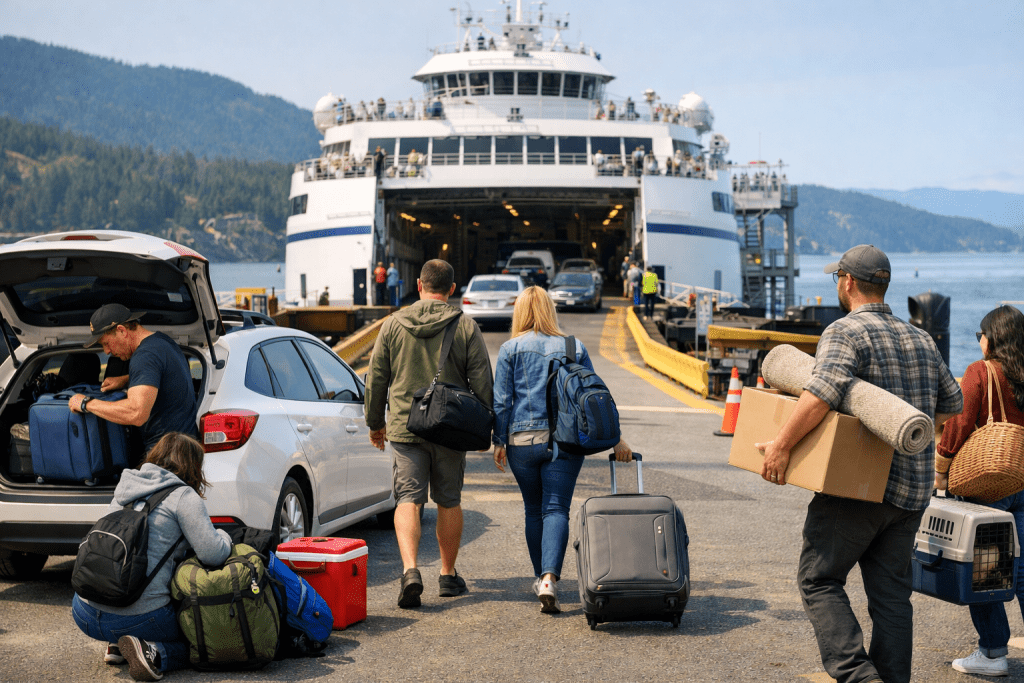
Remove and transport separately:
- Valuables and documents
- Jewelry
- Prescription medications
- Irreplaceable items
Timeline Planning: How to Schedule the Move Correctly
Ideal Move-Day Flow
- Early morning loading
- Pre-booked ferry crossing
- Transit buffer for terminal delays
- Afternoon unloading on arrival
Seasonal Timing Considerations
- Summer: Book weeks in advance
- Winter: Weather buffers required
- Month-End: Highest demand, limited availability
Professionally managed long-distance moves account for these factors proactively. For a comprehensive overview of coast-to-coast relocation logistics, see this long-distance movers guide.
Specialty Items and Ferry Logistics
Pianos, Antiques & High-Value Items
These require:
- Custom crating
- Load-balancing
- Specialized straps
- Controlled positioning on the truck
Ferry motion amplifies damage risk if items are improperly secured.
Vehicles Shipped with Household Goods
Shipping a vehicle alongside household items adds:
- Insurance considerations
- Additional ferry declarations
- Loading coordination
Planning this in advance prevents last-minute denial at the terminal.
Storage & Staging for Island Moves
When Storage Becomes Essential
Storage is often required when:
- Possession dates don’t align
- Ferry delays disrupt timelines
- Renovations aren’t complete
Climate-controlled storage is strongly recommended for island environments due to humidity and temperature variation.
Insurance & Liability Considerations
Valuation Coverage
Ensure your move includes:
- Declared value coverage
- Specialty item riders
- Ferry transit liability clarity
Low-cost moves often exclude meaningful protection—this is where damage claims arise.
Choosing the Right Moving Partner for Island Relocations
What to Look For
- Proven long-distance experience
- Ferry logistics familiarity
- Transparent pricing
- Dedicated move coordinator
- Documented inventories
Moves involving marine transport are not beginner operations.
For a coast-to-coast perspective on planning moves across provinces, review this Ottawa to Vancouver moving guide, which covers large-scale logistics and risk mitigation.
Final Steps Before Move Day
Confirm Everything 72 Hours Prior
- Ferry reservation number
- Truck dimensions
- Terminal arrival times
- Access instructions at destination
Prepare a Ferry-Day Essentials Kit
Carry:
- Personal documents
- Chargers
- Weather-appropriate clothing
- Snacks and water
- Terminal wait-time entertainment
Book with Confidence
Victoria to Vancouver Island relocations demand precision, experience, and planning discipline. When executed properly, the move is seamless. When rushed or under-planned, delays and damage follow.
To coordinate a professionally managed island relocation and receive a tailored moving plan, connect directly through Prestige Moving’s contact page.
Frequently Asked Questions
1. Do moving trucks need ferry reservations?
Yes. Commercial and oversized vehicles should always reserve in advance to guarantee sailing access.
2. Can movers handle ferry paperwork and logistics?
Professional long-distance movers manage declarations, schedules, and terminal requirements as part of the service.
3. Are ferry delays common during moves?
They can occur due to weather, demand, or mechanical issues. Proper scheduling includes buffer time.
4. What items are prohibited on ferries?
Fuel containers, propane tanks, flammable chemicals, and certain batteries are restricted.
5. Is storage recommended for island moves?
Yes, especially when possession dates or ferry availability are uncertain.