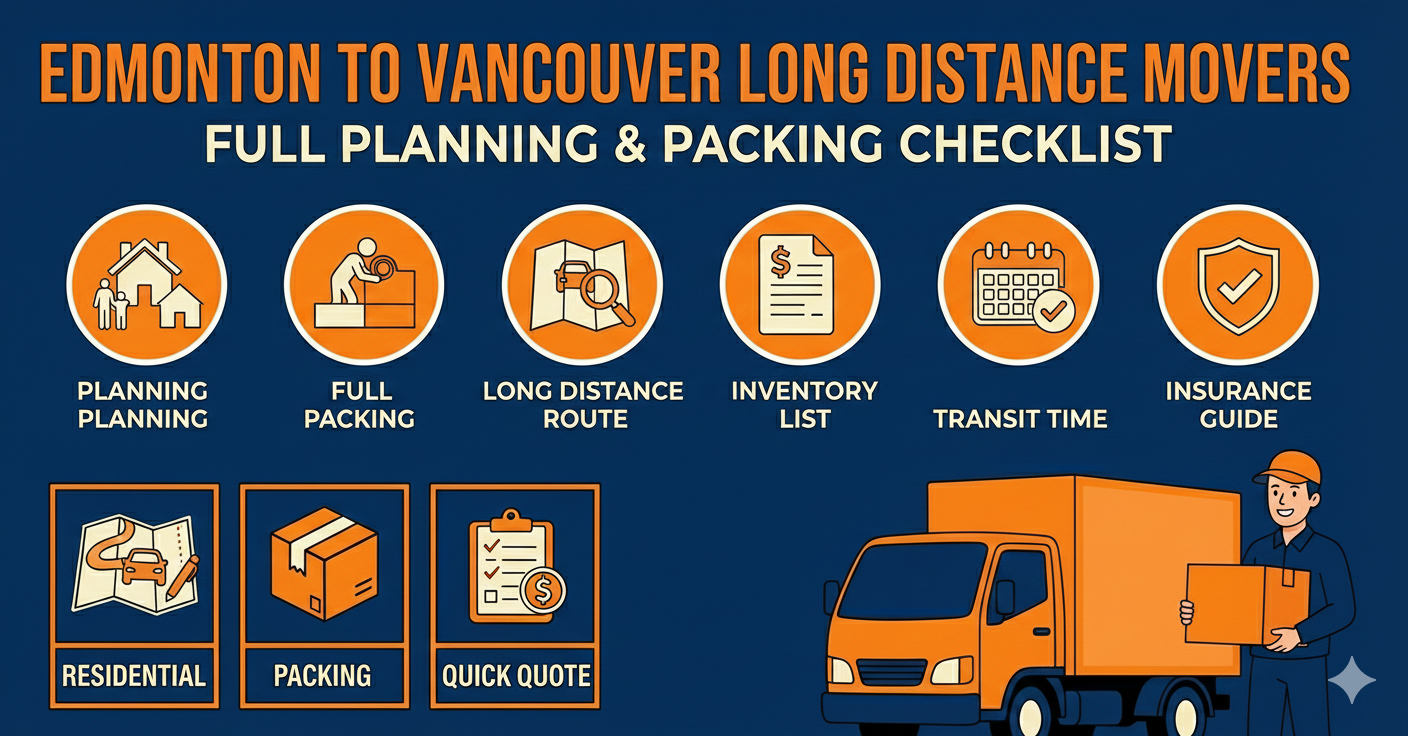
Relocating from Edmonton to Vancouver is one of the most logistically demanding moves in Canada. Covering more than 1,100 kilometers across multiple climate zones and mountain corridors, this journey requires precision planning, disciplined packing, and a clear understanding of how long-distance moving works. When executed correctly, the move becomes predictable, controlled, and cost-efficient. When rushed or improvised, it becomes expensive and stressful.
This comprehensive guide is written to outperform competing resources by delivering exact, actionable steps—no fluff, no filler. Every section below is designed to help households, professionals, families, and retirees plan a flawless Edmonton to Vancouver long-distance move.
Understanding the Edmonton to Vancouver Long-Distance Move
An interprovincial relocation between Alberta and British Columbia introduces variables that local moves never face. Elevation changes, unpredictable weather, ferry schedules for coastal access, and strict delivery windows all affect timing and pricing.
Professional movers handle these variables through route optimization, consolidated loads, and secured scheduling. Choosing experienced long-distance movers—rather than general local operators—is the difference between controlled execution and logistical chaos. This is why many Canadians rely on coast-to-coast specialists such as long distance movers who understand provincial regulations, weight calculations, and transit risks.
8–10 Weeks Before Moving: Strategic Planning Phase
Confirm Your Moving Date Early
Peak moving seasons in Canada—May through September—fill quickly. Securing your preferred date early prevents premium pricing and limited availability.
Request Accurate Moving Quotes
Long-distance pricing depends on:
- Total shipment weight
- Volume and item type
- Pickup and delivery access
- Fuel surcharges and transit distance
Review transparent pricing structures such as long-distance moving costs to avoid surprise fees later.
Inventory Your Entire Home
Create a room-by-room inventory. This not only improves quote accuracy but also helps movers plan truck space, padding requirements, and manpower allocation.
6–7 Weeks Before Moving: Declutter & Downsize
Transporting unnecessary items across provinces increases cost dramatically. This phase is about ruthless efficiency.
Eliminate What You Don’t Need
- Donate usable furniture
- Sell large items locally
- Dispose of damaged goods responsibly
Reducing shipment weight by even 10% can lower costs substantially on a cross-country move.
Specialty Items Require Early Planning
Antiques, pianos, gym equipment, and artwork require dedicated handling and crating. Engage specialists early for items like antique furniture or piano moving to avoid last-minute delays.
5 Weeks Before Moving: Packing Strategy Development
DIY Packing vs Professional Packing
DIY packing may appear cost-effective, but improper packing leads to breakage, insurance disputes, and re-packing delays. Many long-distance clients choose professional packing services to ensure consistency, speed, and liability protection.
Acquire High-Grade Packing Supplies
Use:
- Double-walled boxes
- Heavy-duty tape
- Mattress bags
- Stretch wrap
- Custom crates for fragile items
Avoid grocery boxes and reused cartons; they collapse under stacked weight during transit.
4 Weeks Before Moving: Administrative Preparation
Change Address & Service Transfers
Notify:
- Banks and insurance providers
- CRA and provincial services
- Utilities and subscription services
Canada Post mail forwarding should be scheduled at least four weeks prior to departure.
Review Insurance Coverage
Understand the difference between basic carrier liability and full-value protection. Moving insurance details matter during long-distance transport where handling frequency increases. This guide on why insurance matters explains coverage gaps many people overlook.

3 Weeks Before Moving: Begin Packing Non-Essentials
Room-by-Room Packing System
Label each box clearly with:
- Room name
- Fragility level
- Priority (open first / open last)
Pack seasonal clothing, décor, books, and rarely used items first.
Protect Furniture Correctly
Disassemble large items when possible. Wrap wood surfaces, pad corners, and secure loose components. Follow expert methods outlined in furniture protection guides to avoid transit damage.
2 Weeks Before Moving: Confirm Logistics
Finalize Moving Agreement
Confirm:
- Pickup and delivery windows
- Estimated transit time
- Payment structure
- Inventory list
Professional operators will provide a binding or not-to-exceed estimate.
Prepare Vancouver Arrival Details
Ensure your destination allows moving trucks, elevator bookings, and parking access. Vancouver neighborhoods often require permits or off-hour scheduling, especially in high-density zones.
1 Week Before Moving: Final Packing & Essentials Kit
Prepare a Personal Essentials Box
Include:
- Important documents
- Medications
- Electronics chargers
- Toiletries
- Clothing for 7–10 days
This box stays with you—not on the truck.
Confirm Contact Details
Provide movers with reliable phone numbers for both pickup and delivery coordination.
Moving Day: Execution Phase
Supervise Loading
Ensure:
- Inventory is checked
- Fragile items are noted
- Boxes are loaded by weight (heavy first)
Professional crews follow standardized loading protocols that reduce shifting during mountain transit.
Final Walkthrough
Check all rooms, closets, storage units, and garages before departure.
Transit Period: What to Expect
Edmonton to Vancouver transit typically ranges from 4–7 days depending on weather, load consolidation, and delivery scheduling. Reputable movers provide tracking updates and maintain climate-controlled storage if early arrival is required.
Delivery Day in Vancouver
Inspect Before Signing
Check furniture and boxes against the inventory list. Note any discrepancies immediately.
Direct Placement
Instruct movers where to place items to avoid unnecessary re-handling.
After unloading, follow a structured post-move checklist to re-establish utilities, registrations, and daily routines efficiently.
Why Professional Long-Distance Movers Matter
Long-distance moves punish shortcuts. Trained crews, insured transport, optimized routing, and systematic packing dramatically reduce risk. Cost savings from DIY attempts often vanish after damage, delays, or rescheduled deliveries.
For verified expertise and transparent booking, connect directly through Prestige Moving’s contact page to secure experienced cross-province support.
Frequently Asked Questions
1. How much does it cost to move from Edmonton to Vancouver?
Costs vary based on weight, volume, and services selected. Most full-service moves range from mid-four to five figures depending on complexity.
2. How long does delivery take?
Average transit is 4–7 days, though weather and consolidation schedules can affect timing.
3. Are my belongings insured during transport?
Basic liability is included, but full-value protection is recommended for long-distance moves.
4. Can movers store my items temporarily?
Yes. Secure, climate-controlled storage is commonly available if your new home isn’t ready.
5. Is professional packing worth it for long-distance moves?
Yes. It minimizes damage risk, speeds loading, and simplifies claims if issues arise.
Final Thoughts
An Edmonton to Vancouver relocation is not a casual move—it is a logistical operation. Precision planning, disciplined packing, and professional execution eliminate uncertainty and protect your investment. This checklist exists to ensure every step is deliberate, efficient, and optimized for success.
For tailored planning, accurate pricing, and coast-to-coast expertise, begin your booking directly through Prestige Moving and secure your long-distance move with confidence.