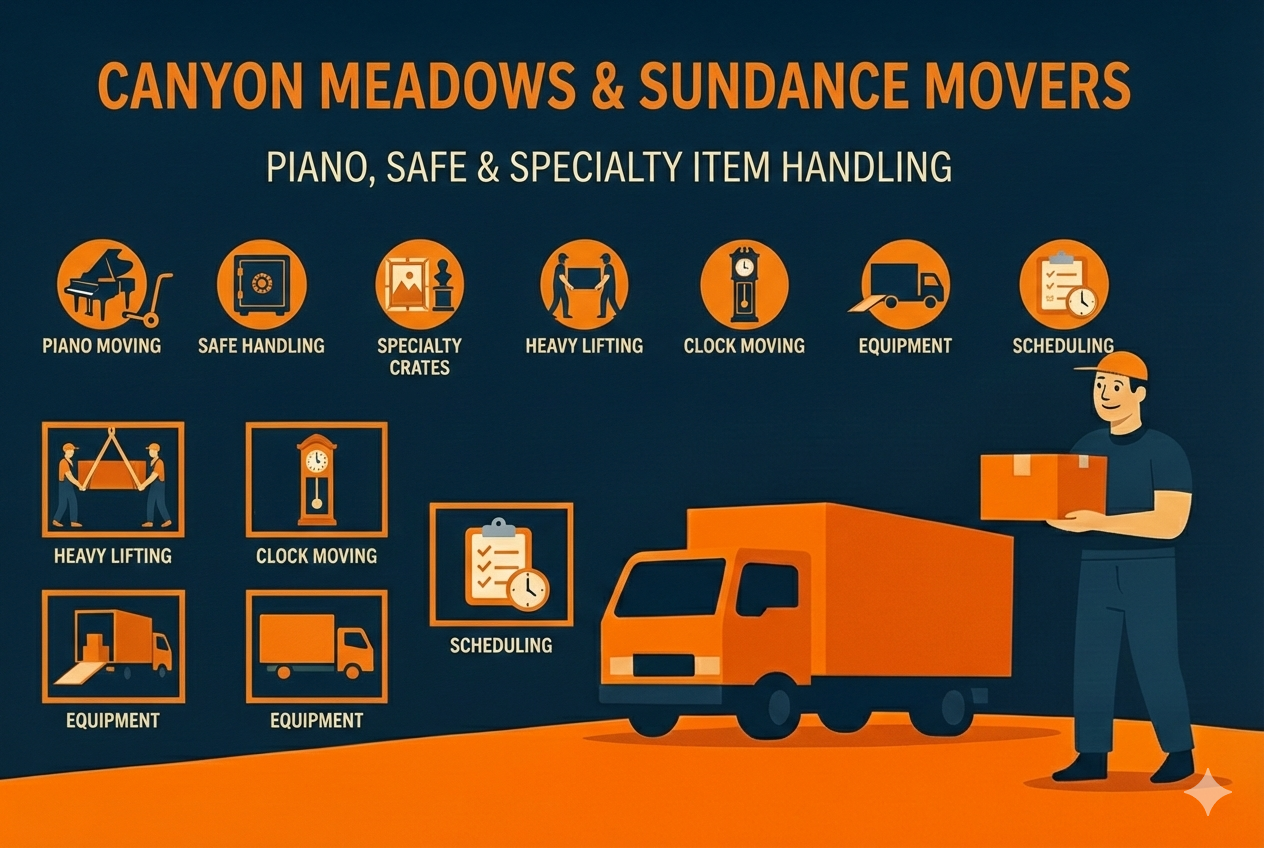
Moving a couch is one thing. Moving a piano, a heavy safe, or a one-of-a-kind specialty item is an entirely different category of work—where the plan matters as much as the crew, and where the right equipment is the difference between a smooth relocation and a costly disaster. For homeowners and businesses in Canyon Meadows and Sundance, specialty moves require a professional approach: documented handling steps, correct protection systems, and a team that understands how to move weight and value without stress, scratches, dents, or structural damage.
This guide explains, in business-ready detail, how specialized movers handle pianos, safes, antiques, and fragile specialty items with disciplined procedures—so your most valuable items arrive intact, your property stays protected, and your timeline remains on track.
Why Specialty Item Handling Is Not “Just Moving”
Specialty items have three things in common: risk, weight, and value. Even when an item is not extremely heavy, its shape, fragility, or internal mechanics can make it difficult to move safely.
Specialty Moves Require a Process
Professional specialty handling uses a repeatable method:
- Assessment of access routes, stairs, angles, and surfaces
- Protection of floors, walls, door frames, and the item itself
- Controlled movement using the right tools and securement
- Transport discipline—load balance, tie-down strategy, and shock reduction
- Placement at destination with leveling, positioning, and final checks
When planning any high-risk move, a practical starting point is reviewing a complete relocation framework like Movers in Ottawa: Your Ultimate Guide to Stress-Free Relocation in 2025—the same principles of planning and risk reduction apply directly to specialty items.
Professional Piano Moving in Canyon Meadows & Sundance
A piano is not “a big piece of furniture.” It is a precision instrument with internal components that can be impacted by shock, vibration, sudden temperature change, or incorrect lifting angles. Whether you own an upright, studio, baby grand, or concert grand, piano moving should be handled by crews trained for the task.
For a dedicated service overview, see Piano Moving Services—built specifically around the realities of instrument protection and controlled transport.
What Makes Pianos Hard to Move
Pianos challenge movers for several reasons:
- Unbalanced weight distribution (top-heavy uprights; asymmetric grands once legs are removed)
- Sensitive internal action and soundboard that can shift under impact
- High-gloss finishes that scratch easily and show every mark
- Awkward geometry that complicates stairs, landings, and tight turns
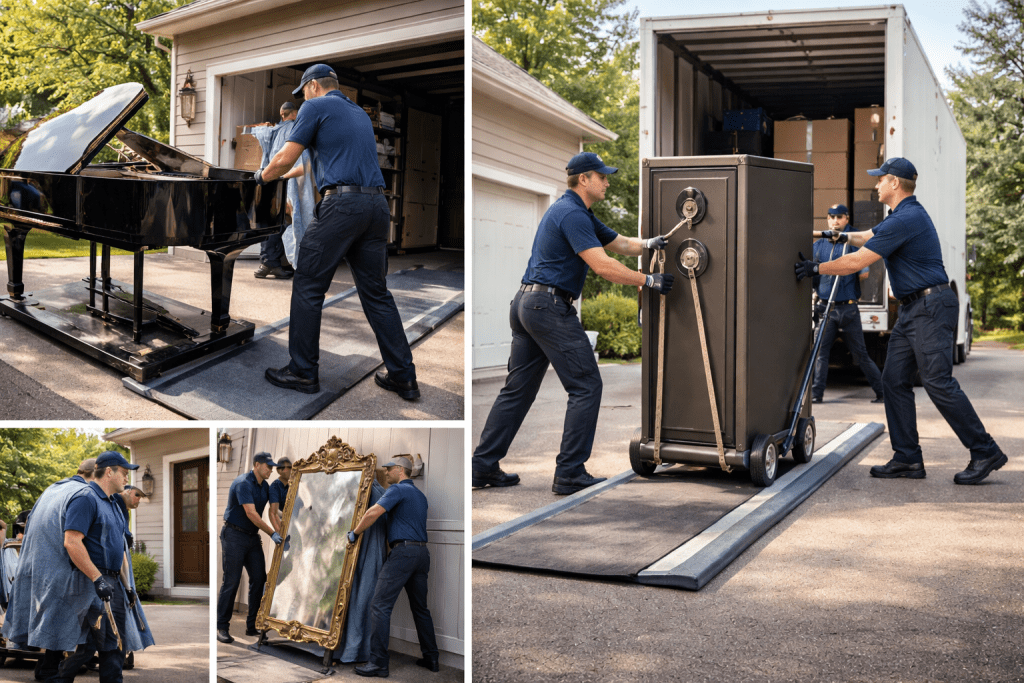
How Professionals Move Upright Pianos
A professional upright piano move typically includes:
- Keybed and lid secured to prevent movement during transport
- Thick padding system applied without abrasive contact to the finish
- Piano dolly positioning to keep the center of gravity stable
- Stair strategy using spotters and controlled descent/ascent methods
- Vehicle securement to reduce vibration and shifting
How Professionals Move Grand & Baby Grand Pianos
Grand pianos require partial disassembly and a more technical load plan:
- Legs and lyre removed and packed separately
- Body mounted on a specialized piano board
- Strapped and stabilized to prevent torsion or movement
- Careful door and hallway navigation using precise turning technique
- Reassembly considerations at destination based on floor type and room layout
Post-Move Care Matters
Once placed, a piano should be allowed time to acclimate to its environment. Temperature and humidity changes can affect tuning stability. A practical reference point for household environmental safety and moving-related precautions is guidance from major public resources such as Government of Canada consumer and household information pages (external resource):
(External links are provided as general guidance resources; specialty movers focus on safe transport and placement, while tuning/maintenance should be handled by qualified piano technicians.)
Safe Moving in Canyon Meadows & Sundance: Heavy, Dense, and High Risk
Safes and vaults are among the most challenging residential and commercial items to relocate. They are dense, extremely heavy, and capable of destroying flooring, stairs, and walls if moved without correct equipment and technique.
Why Safes Are a Different Kind of Heavy
Unlike furniture, safes concentrate weight into a small footprint. That concentrated load increases risk of:
- Cracked tiles or stone
- Damaged hardwood (compression and gouging)
- Stair collapse risk in worst-case scenarios
- Door frame and wall damage during pivots and tight turns
How Professionals Move a Safe
A disciplined safe move includes:
- Route mapping with width and turning-radius checks
- Floor protection panels and edge guards
- Heavy-duty dolly selection based on weight class
- Controlled incline/decline technique on stairs or ramps
- Secure tie-down method to prevent sliding during transport
- Final placement precision to avoid concentrated pressure at edges
For multi-item jobs that include safes, gym equipment, large art pieces, and other oversized valuables, Specialty Item Moving Service is designed around these risk categories.
Insurance and Documentation
When moving safes or high-value assets, documentation is not optional. Professional movers should provide clear paperwork and defined responsibilities. For a strong baseline understanding of why documented coverage matters, see Why Insurance Matters: Protecting Your Belongings During an Ottawa Move.
Antiques, Artwork, and Fragile Specialty Items
Antiques and collectibles often cannot be “replaced,” only restored—sometimes at great expense, sometimes never fully. The moving standard must be closer to preservation than transportation.
A dedicated overview for careful handling is found in Professional Antique Furniture Moving Services, which aligns with white-glove practices used for heirloom pieces.
What Professional Antique Handling Looks Like
- Material-specific wrapping for wood, glass, metal, lacquer, and textiles
- Corner protection and crush zones to absorb incidental pressure
- Custom boxing or crating for irregular shapes
- Load separation so antiques never sit under heavier items
- Vibration reduction via secure packing and stable truck loading
Packing Is the Difference Between “Moved” and “Damaged”
Specialty movers treat packing as a core service, not an add-on. If you want an example of packing standards that reduce damage risk during transport, review the structured approach in How to Protect Your Furniture When Moving: Expert Packing Guide.
Site Logistics in Canyon Meadows & Sundance Homes
Specialty item moving is heavily influenced by property layout. Many homes include:
- Split-level entries and mid-stair landings
- Finished basements and narrow stairwells
- Hardwood, tile, and engineered flooring that must be protected
- Tight hallway turns or limited door clearance
Property Protection Systems
Professional crews should arrive with:
- Floor runners and rigid floor panels
- Corner guards and wall padding
- Door jamb protection and threshold covers
- Clean, non-marking equipment wheels
- Wrap systems that don’t transfer dye or adhesive
This is not cosmetic. Property protection reduces claim risk, prevents schedule delays, and preserves homeowner satisfaction—especially when moving a piano, safe, or antique where the route is tight and the cost of error is high.
Transparent Pricing Expectations for Specialty Moves
Specialty moving is priced differently from basic household moves because it requires:
- Extra labor and time
- Specialized equipment
- Increased handling risk
- Additional packing materials
- More complex route planning
For a reference point on transparent pricing structure and what impacts cost, use Pricing as a practical internal resource. For scheduling and planning decisions that can influence timing and availability, this planning reference is also useful: The Best Day of the Week to Move.
A Professional Specialty Move Checklist
Before the Crew Arrives
- Photograph the item condition (corners, surfaces, serial plate if applicable)
- Clear pathways and remove rugs that can slip
- Confirm door measurements and stair clearance
- Secure pets and restrict traffic during the move
During Handling
- Ensure floor protection is installed before the item is moved
- Confirm the item is wrapped before it crosses thresholds
- Confirm a spotter is used for tight turns and stairs
- Ensure the truck is loaded with weight distribution in mind
After Placement
- Inspect for surface marks or compression points
- Confirm the item is stable, level, and positioned correctly
- Keep packing materials until confirmation is complete
Canyon Meadows & Sundance Specialty Moves for Seniors, Families, and Estate Transitions
Specialty items are frequently part of downsizing moves, estate transitions, and senior relocations—especially when families are moving heirlooms, antiques, or instruments to a new residence.
For a structured service model that often overlaps with specialty item requirements, review Senior Moving Services to align planning with high-care handling expectations.
Common Specialty Items Moved Besides Pianos and Safes
While pianos and safes are the most requested specialty moves, professional movers in Canyon Meadows and Sundance also handle:
- Treadmills, home gyms, and commercial fitness machines
- Oversized stone or marble furniture
- Large-format mirrors and fragile glass
- Medical equipment and accessibility devices
- High-end electronics and server racks
- Custom cabinetry and built-ins
- Artwork, sculptures, and collector displays
The consistent standard across all categories is the same: planned handling + correct protection + controlled transport + documented accountability.
Booking a Specialty Move Without Delays
Specialty moves should be booked earlier than standard moves due to limited availability of trained crews and equipment. When timing matters, the fastest route to confirmation is using a structured booking process like Booking so the right crew and gear are allocated for your item category.
When you are ready to finalize details, your last step should always be direct coordination through Contact so the scope, access notes, and specialty requirements are recorded properly.
FAQs
1) How much does it cost to move a piano in Canyon Meadows or Sundance?
Piano moving costs vary based on piano type (upright vs grand), stairs, distance, and access complexity. A precise quote requires route and item details, especially for stairs and tight turns.
2) Can movers relocate a safe without damaging floors?
Yes—when professional floor protection panels, correct dollies, and controlled movement techniques are used. Safe moving should never involve dragging, uncontrolled tipping, or bare-floor transport.
3) Do specialty movers disassemble a grand piano?
Professional movers typically remove legs and lyre, protect and strap the body on a piano board, and pack components separately. Reassembly is handled carefully at destination placement.
4) What should be done to protect antiques during a move?
Antiques should be wrapped using non-abrasive materials, reinforced at corners, isolated from heavier loads, and ideally boxed or crated if high value or fragile. Packing is the most important layer of protection.
5) How early should specialty item moving be booked?
Earlier is better—specialty crews and equipment availability can be limited, especially during peak seasons. Booking in advance improves scheduling options and ensures the right resources are assigned.
Conclusion: Specialty Item Moving Done the Right Way
A piano, a heavy safe, or a valuable antique cannot be treated like standard household freight. In Canyon Meadows and Sundance, specialty moving must be executed with a disciplined process: engineered planning, property protection, correct equipment, controlled movement, and accountable handling from pickup to placement. When done properly, specialty items arrive exactly as they should—intact, stable, and ready to be enjoyed in their new space.
To discuss a specialty move and secure a professional crew, finalize your request through Contact.