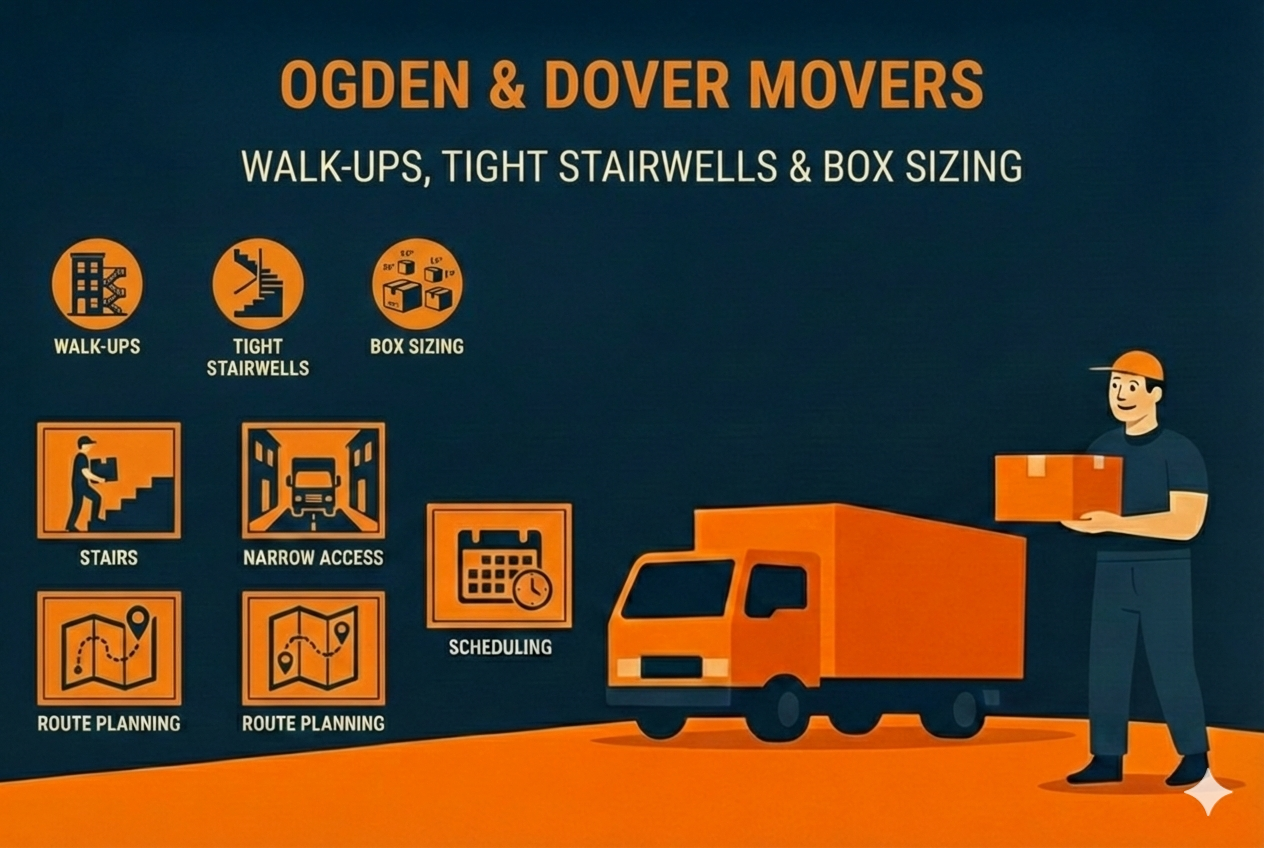
Moving in Ogden and Dover is not a generic relocation exercise. These Calgary neighbourhoods are defined by older low-rise buildings, narrow interior layouts, exterior walk-ups, limited alley access, and stairwells that were never designed with modern furniture—or modern box sizes—in mind. Successful moves here demand planning, precision, and movers who understand how to work with architectural constraints instead of fighting them.
This guide is written for residents, landlords, property managers, and business owners preparing for a move in Ogden or Dover. It addresses the realities of walk-up apartments, tight staircases, box sizing strategy, building protection, and how professional movers execute efficient, damage-free relocations in these challenging environments.
Understanding Ogden & Dover’s Building Layout Challenges
Ogden and Dover are among Calgary’s most established neighbourhoods, with housing stock dating back several decades. That history brings charm—but also logistical complexity.
Common Structural Obstacles
- Exterior walk-ups with no elevators
- Narrow stairwells with sharp turns and low overhead clearance
- Tight hallways that restrict two-person carries
- Older door frames narrower than modern furniture standards
- Limited street parking and back-lane access constraints
These factors directly affect move time, labor requirements, box selection, and equipment planning.
Walk-Up Moves: Why They Require a Different Strategy
Stairs Change Everything
Walk-up moves are not about brute force. They are about balance, pacing, and technique. Each flight of stairs increases:
- Carry time per item
- Physical strain on movers
- Risk of wall, railing, and tread damage
Professional crews plan walk-up moves with item sequencing, load balancing, and crew rotation to prevent fatigue and mistakes.
For a broader understanding of how professional crews structure efficient relocations, see this comprehensive guide on professional movers in Ottawa, which outlines similar logistics used in dense urban environments.
Tight Stairwells: Precision Moving, Not Guesswork
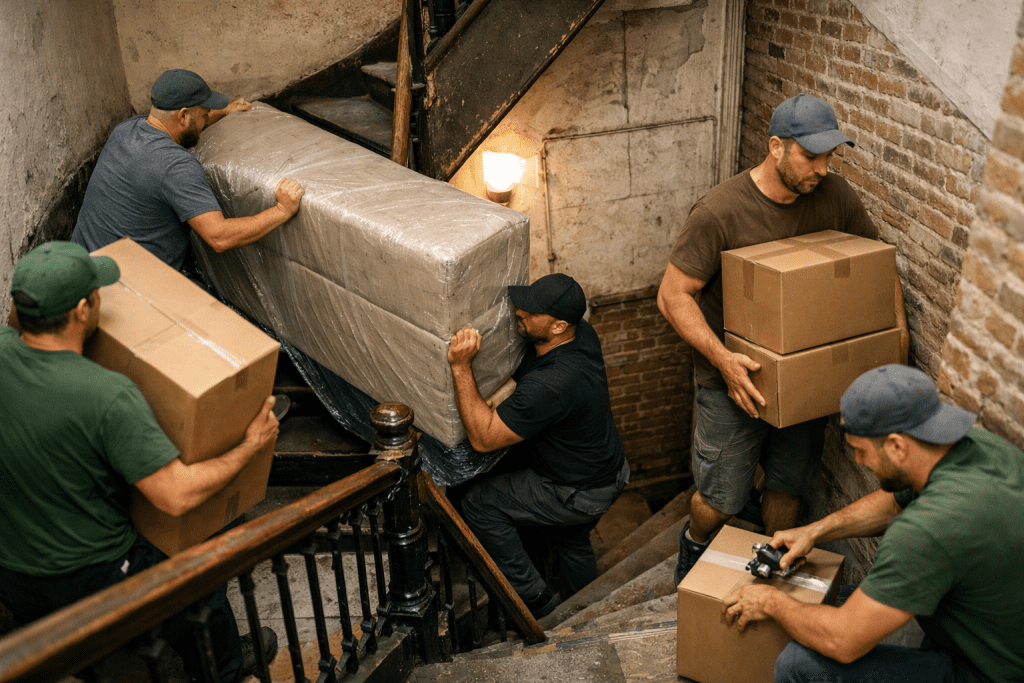
Why Tight Staircases Cause Most Moving Damage
Damage in walk-up buildings almost always occurs in stairwells—not doorways. The reasons:
- Improper turning angles
- Oversized boxes
- Unwrapped furniture corners
- Rushed descents
Experienced movers measure stair width, ceiling clearance, and landing depth before unloading the truck. Items are staged and carried in a specific order to avoid congestion and collisions.
For specialty items such as antiques or pianos, additional handling protocols are required. Reference professional techniques used in antique furniture moving services where stairwell navigation is a primary risk factor.
Box Sizing: The Most Overlooked Factor in Walk-Up Moves
Why Bigger Boxes Are a Liability
In Ogden and Dover, oversized boxes are a mistake. While large boxes seem efficient, they:
- Become unmanageable on stairs
- Increase drop risk
- Obstruct visibility during descent
- Cause shoulder and wall damage
Optimal Box Sizes for Walk-Ups
- Small boxes (books, tools, canned goods)
- Medium boxes (kitchen items, decor, electronics)
- Dish packs with reinforced walls
- Wardrobe boxes only if stair width allows
Professional movers follow strict weight limits per box to maintain control on staircases. For guidance on protective packing methods, review this expert breakdown on how to protect furniture when moving.
Furniture Disassembly: A Non-Negotiable Step
What Must Be Disassembled in Walk-Up Buildings
- Bed frames and headboards
- Sectional sofas
- Dining tables
- Large shelving units
- Gym equipment
Attempting to force assembled furniture through tight stairwells leads to structural damage and personal injury. Professional movers disassemble items onsite, label hardware, and reassemble them at destination.
This same approach is standard in complex residential relocations, as detailed in mastering residential relocations.
Building Protection in Older Walk-Up Properties
Why Protection Is Mandatory
Many Ogden and Dover buildings have:
- Plaster walls instead of drywall
- Narrow wooden railings
- Original stair treads
- Aged flooring materials
Professional crews install:
- Corner guards
- Stair runners
- Floor protection sheets
- Door jamb padding
This prevents disputes with landlords and property managers and avoids costly post-move repairs.
Time & Labor Planning for Ogden and Dover Moves
Why Hourly Estimates Fail Without Walk-Up Assessment
A second-floor walk-up with tight stairs can take 30–50% longer than a ground-floor move with the same inventory. Professional estimates account for:
- Number of flights
- Stair angle and landing size
- Carry distance from truck to entrance
- Box count and average weight
Transparent pricing models are explained in detail on the moving pricing page, which outlines how complexity impacts labor allocation.
Parking, Permits & Local Compliance
Street and Lane Access Challenges
Ogden and Dover often require:
- Temporary parking accommodations
- Coordination with neighbours
- Awareness of municipal bylaws
Municipal guidance on residential parking and temporary restrictions can be found through official city resources such as local transportation and parking authorities (for example, municipal bylaw departments and transport ministries).
Understanding parking legality helps prevent ticketing, towing, and move-day delays.
Specialty Items in Tight Spaces
Pianos, Safes, and Fragile Items
These items require:
- Stair-rated dollies
- Load straps
- Additional crew members
- Controlled descent planning
For high-risk items, movers use methods similar to those detailed in professional piano moving services, adapted for walk-up environments.
Who Benefits Most from Professional Walk-Up Movers
Ideal Use Cases
- Tenants in older apartment buildings
- Seniors downsizing from walk-up units
- Students relocating between rentals
- Landlords coordinating tenant turnover
Senior relocations in particular benefit from reduced physical strain and structured packing systems, as outlined in senior moving services.
Booking the Right Crew for Ogden & Dover
Walk-up expertise is not standard—it is specialized. Booking movers who understand stair logistics ensures:
- Faster completion
- Reduced damage risk
- Accurate pricing
- Lower stress
Moves should always be scheduled with detailed walkthroughs and inventory reviews. Professional booking systems allow crews to allocate proper equipment and manpower in advance.
To initiate planning or request a structured quote, use the official contact page to coordinate logistics early.
Frequently Asked Questions
1. Are walk-up moves more expensive?
They can be, due to increased labor time and physical complexity, but accurate planning prevents unexpected costs.
2. Can large furniture fit through Ogden stairwells?
Only if properly disassembled. Forcing items through intact increases damage risk.
3. What box size is best for walk-up apartments?
Small to medium boxes with controlled weight are safest and fastest to move.
4. Do movers protect stairwells automatically?
Professional crews do. Always confirm protection protocols before booking.
5. How long does a typical walk-up move take?
Expect longer timelines than elevator buildings—usually 25–50% more time depending on layout.
Conclusion: Precision Matters in Ogden & Dover Moves
Ogden and Dover demand a moving strategy built around staircases, not square footage. Walk-ups, tight turns, and box sizing are the difference between a smooth relocation and a costly mistake. With the right planning, professional handling, and realistic expectations, even the most constrained buildings can be moved efficiently and safely.